
Understanding California's New Disclosure Laws: Floods, Fires, and Sea-Level Rise

Written by: New Era Escrow Team | Nov 3, 2026
Blog Summary
- California’s natural hazard disclosures can identify whether a property is in certain flood, fire, and other hazard zones.
- A California Flood Zone Map helps buyers determine whether a property is in a federally designated flood hazard area.
- Updated wildfire disclosure requirements have expanded the information provided about high- and very high-fire-hazard areas.
- California’s environmental planning efforts increasingly address sea-level rise, especially in coastal communities.
- Buyers should review disclosures, maps, insurance requirements, and other property information before closing.
Table of Contents
ToggleCalifornia is home to some of the country’s most climate-sensitive real estate. Environmental risks are a growing concern for both property buyers and sellers, especially in areas exposed to flooding, wildfires, and coastal hazards. California has continued to strengthen its disclosure and hazard-mapping requirements, giving buyers more information about risks that may affect a property.
If you were buying a home in a flood zone, wouldn’t you want to know before signing the contract? These disclosure requirements improve transparency and help buyers make informed decisions before completing a purchase.
What’s New in California Disclosure Law?
California has made several changes to its property disclosure requirements in recent years to give buyers clearer information about natural hazards and property conditions. Some of these changes took effect in 2024 and 2025, including expanded information about wildfire hazards and certain property improvements.
Assembly Bill 1280 (AB 1280), effective January 1, 2025, expanded the Natural Hazard Disclosure Statement to include high fire hazard severity zones in addition to very high fire hazard severity zones. It also added information about whether a property is located within a state responsibility area or a local responsibility area (DRE, 2025).
California’s natural hazard disclosure requirements can also provide information about special flood hazard areas, fire hazard severity zones, earthquake fault zones, seismic hazard zones, and other conditions identified by state law. These California disclosure laws are designed to give buyers relevant information about potential risks before they move forward with a purchase (DRE, 2025).
However, disclosures are only one part of the home-buying process. Buyers should review the information carefully and, when appropriate, consider additional inspections, insurance requirements, hazard maps, and professional advice. Sellers, meanwhile, should provide required disclosures accurately and on time to help keep the transaction clear and organized.
Understanding Flood Zones California Buyers Should Know
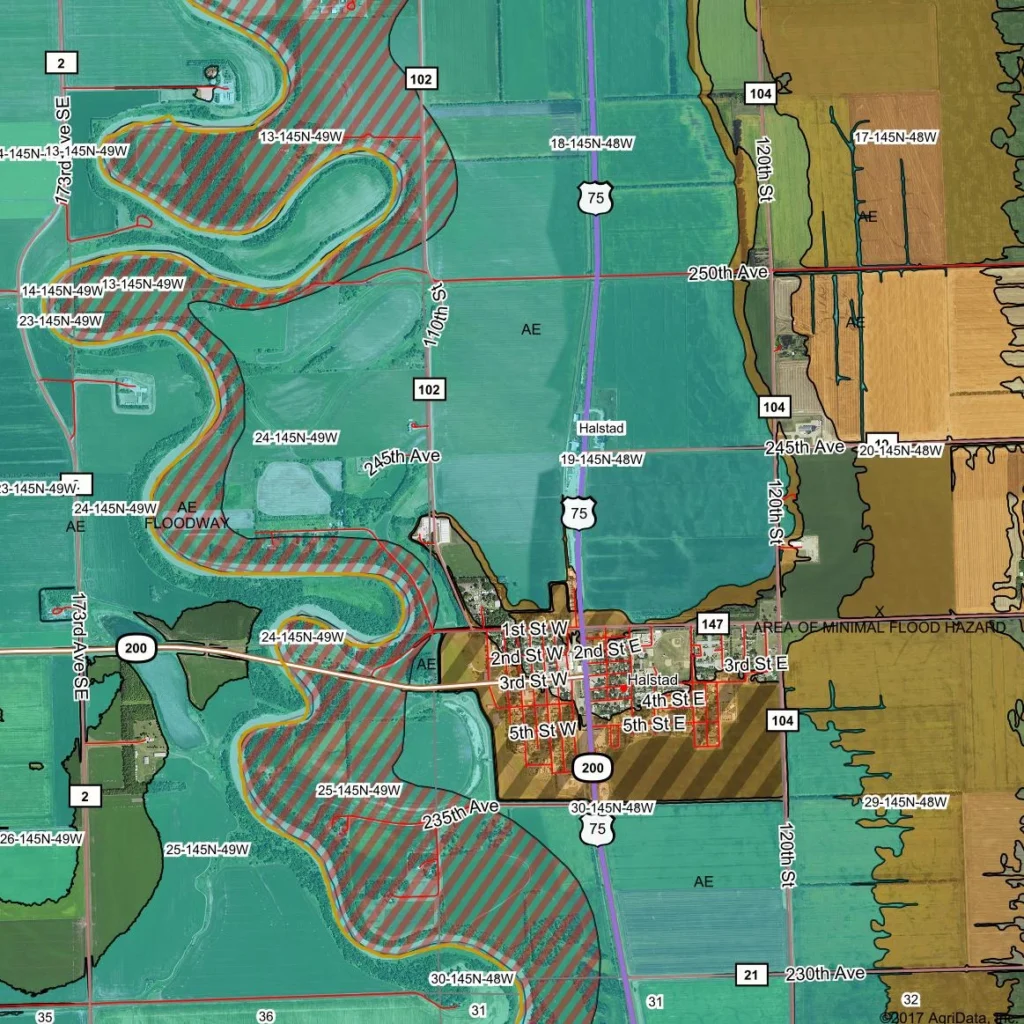
Flood risk is a key part of California’s natural hazard disclosure requirements. A seller or seller’s agent generally must disclose when a covered property is located in a federally designated Special Flood Hazard Area under the conditions specified by law (California Legislative Information, n.d.).
The Federal Emergency Management Agency (FEMA) identifies these areas through its maps. FEMA’s Flood Map Service Center is the official public source for flood hazard information used by the National Flood Insurance Program. Buyers can access the California Flood Zone Map through FEMA to check a property and review the applicable flood map and related information (FEMA, 2024).
However, not every location outside a high-risk zone is completely free from flood risk. FEMA’s maps focus on specific mapped hazards, while additional local information may provide a broader picture of conditions affecting a property.
READ RELATED ARTICLE

What Do the New Wildfire Disclosures Mean?
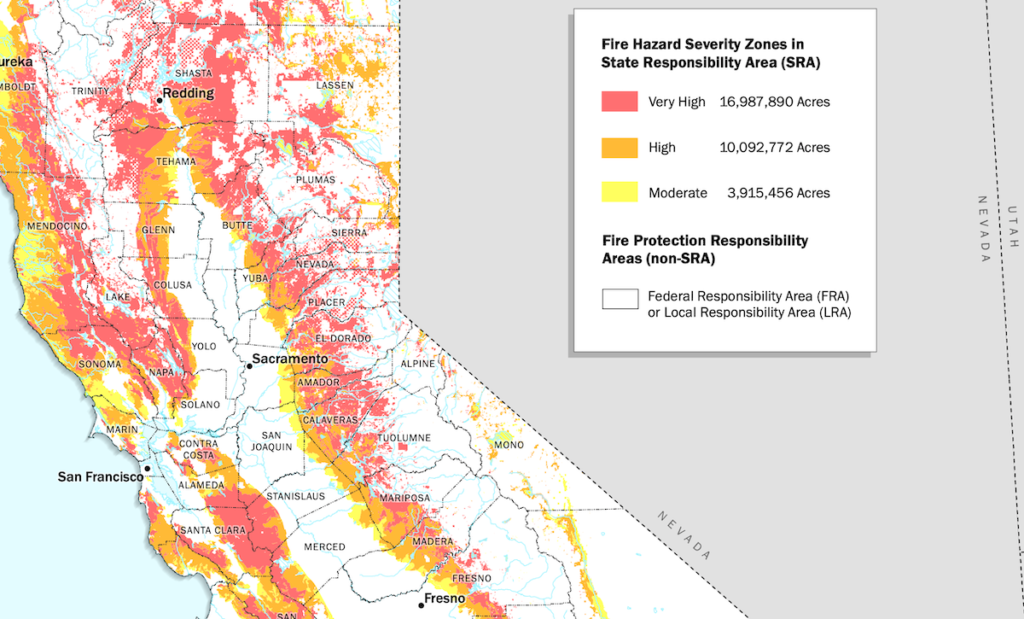
Wildfire risk has received increased attention in California’s disclosure requirements. AB 1280, enacted in 2023, revised the Natural Hazard Disclosure Statement to include whether a property is located in a high fire hazard severity zone, expanding the disclosure beyond the previous focus on very high fire hazard severity zones. The disclosure also identifies whether the property is in a state- or local-responsibility area (DRE, 2025).
The Natural Hazard Disclosure Statement now specifically identifies high- or very high-Fire Hazard Severity Zones and notes applicable maintenance requirements.
The Fire Hazard Severity Zone maps are based on factors such as vegetation, terrain, fire weather, fire history, and potential fire behavior. The maps measure hazard only, not the exact risk or potential damage to a specific home (OSFM, n.d.). These zones are based on maps developed under California law (DRE, 2025).
California also requires defensible space and vegetation management in certain fire hazard areas. For covered properties in high or very high fire hazard severity zones, sellers may need to provide documentation concerning compliance with applicable vegetation management requirements. If the required documentation wasn’t obtained, California law provides for specific arrangements between the buyer and seller in qualifying situations (DRE, 2025).
Checking this matters. A property shown on a fire hazard map isn’t automatically destined to experience wildfire damage, but the designation can indicate conditions that deserve closer attention.
What Should Buyers Know About Sea-Level Rise?
Sea-level rise is also becoming an increasingly important consideration in California’s coastal planning. However, don’t confuse environmental planning requirements with a statewide seller disclosure requirement.
Sea level has risen about 7 to 8 inches over the past century. Based on current science, sea levels along California’s coast may rise by roughly 1 to 6.6 feet by 2100, depending on future conditions and location (California Coastal Commission, n.d.).
California has also taken steps to address sea-level rise through coastal planning. Senate Bill 272 (SB 272) requires local governments located wholly or partly within the coastal zone to develop a sea-level-rise plan as part of a new or updated Local Coastal Program by January 1, 2034 (California Coastal Commission, n.d.).
These requirements are important for long-term coastal planning, but they shouldn’t be described as a new statewide rule requiring every home seller to provide a specific sea-level-rise disclosure.
Instead, buyers looking at coastal property should review available local planning information, hazard maps, property disclosures, insurance considerations, and other relevant reports. This can provide a more complete picture of the property’s location and potential exposure.
How California Disclosure Laws Affect Buyers
California’s natural hazard disclosures help buyers identify whether a property falls within mapped hazard areas, but they don’t replace independent research or professional advice. Buyers should review disclosures and purchase documents carefully, consider appropriate inspection and financing contingencies, and consult qualified professionals about unfamiliar terms or potential concerns (DRE, n.d.).
Hazard designations may also affect insurance requirements and ownership costs. For example, federally regulated or insured lenders generally require flood insurance for buildings in designated Special Flood Hazard Areas when federal requirements apply, since standard homeowners insurance typically doesn’t cover flood damage (CDI, n.d.).
Buyers can use the California Flood Zone Map as a starting point to investigate potential flood exposure and discuss coverage with their lender and insurance provider. Sellers, meanwhile, should provide accurate disclosures within the required timeframe, including applicable information about natural hazards, wildfire classifications, and property conditions.
Under Assembly Bill 968 (AB 968), certain sellers who acquired a single-family residential property within the previous 18 months must disclose qualifying contractor-performed additions, structural modifications, alterations, or repairs made during their ownership. The requirement applies to qualifying work costing $500 or more and includes specified contractor and permit information (DRE, 2025).
Keeping records of permits, repairs, inspections, and hazard-related documents can help sellers prepare complete disclosures. Because these issues may affect buyer decisions, insurance arrangements, and closing timelines, both parties should address questions early in escrow. The escrow holder manages funds and documents according to the transaction instructions but does not determine whether a property is safe or advise either party whether to proceed. Buyers and sellers should consult the appropriate real estate, insurance, lending, or legal professionals to resolve concerns before closing.
READ RELATED ARTICLE

A Clearer Closing Starts With Better Information
Floods, wildfires, and sea-level rise require different information and shouldn’t be treated as the same disclosure. California’s current framework combines required natural hazard disclosures with state and federal mapping, insurance information, and longer-term environmental planning.
Prioritizing checking the California Flood Zone Map, understanding Flood Zones California, reviewing fire hazard information, and asking about relevant coastal planning can clarify the property before closing.
At New Era Escrow, keeping the transaction organized and properly documented is an important part of the closing process. As the #1 Best Escrow Service in El Segundo, we take pride in giving you genuine service. When you’re ready to move forward, choose our team for reliable escrow support from start to close.
Make social media less time-consuming with easy scheduling and publishing tools.
Affiliate Disclosure: This article contains affiliate links. Clicking on these links and buying these products may result in us receiving a commission at no additional cost to you.
READ RELATED ARTICLE

California Coastal Commission. (n.d.). Sea level rise. https://www.coastal.ca.gov/climate/slr/
California Department of Insurance. (n.d.). Flood insurance resources. https://www.insurance.ca.gov/01-consumers/140-catastrophes/FloodFacts.cfm
California Department of Real Estate. (2025). 2025 real estate law: Pertinent excerpts from the California codes. https://www.dre.ca.gov/files/pdf/relaw/2025/excerpts.pdf
California Department of Real Estate. (2025, July 21). Key updates for California property owners and real estate agents in 2025. https://www.dre.ca.gov/Newsroom/DRE_Updates/2025_07_21_Key_Updates_for_California_Owners_and_Agents.html
California Department of Real Estate. (n.d.). Information for homebuyers. https://dre.ca.gov/Consumers/InformationForHomebuyers.html
California Legislative Information. (n.d.). California Civil Code § 1102.6f. https://leginfo.legislature.ca.gov/faces/codes_displaySection.xhtml?lawCode=CIV§ionNum=1102.6f.
Federal Emergency Management Agency. (2024). Appendix H: Flood maps. https://www.fema.gov/sites/default/files/documents/fema_fim-appendix-h-flood-maps_apr2021.pdf
Office of the State Fire Marshal. (n.d.). Fire Hazard Severity Zones. https://osfm.fire.ca.gov/what-we-do/community-wildfire-preparedness-and-mitigation/fire-hazard-severity-zones
Up Next




Most Popular